


Show us what you’d like to fix
Bring the chip, the gap or the edge that’s been bothering you. We’ll tell you whether bonding is the right fix and walk you through your options and the cost before you decide. You’re only offered what you need.
A chip, a gap or an uneven edge, shaped by hand so the tooth looks like yours again, usually in a single visit.
A corner of a front tooth lost to a fork or a glass. A small gap you’ve never liked, one tooth a little shorter than the next, an edge worn thin. Each is small, but it sits in the middle of your smile, and you notice it every time you see a photo. Dental bonding fixes most of them in a single visit, with little or none of your tooth removed.
At Pearl Aesthetics & Dentistry, in Chicago’s Lincoln Park neighborhood, we take as much care over one chipped tooth as over a whole smile. We shape bonding by hand and match it to the shade of the teeth around it, so nobody can tell which tooth was fixed.
“We believe every detail matters, and we only deliver work that looks beautiful and natural.”
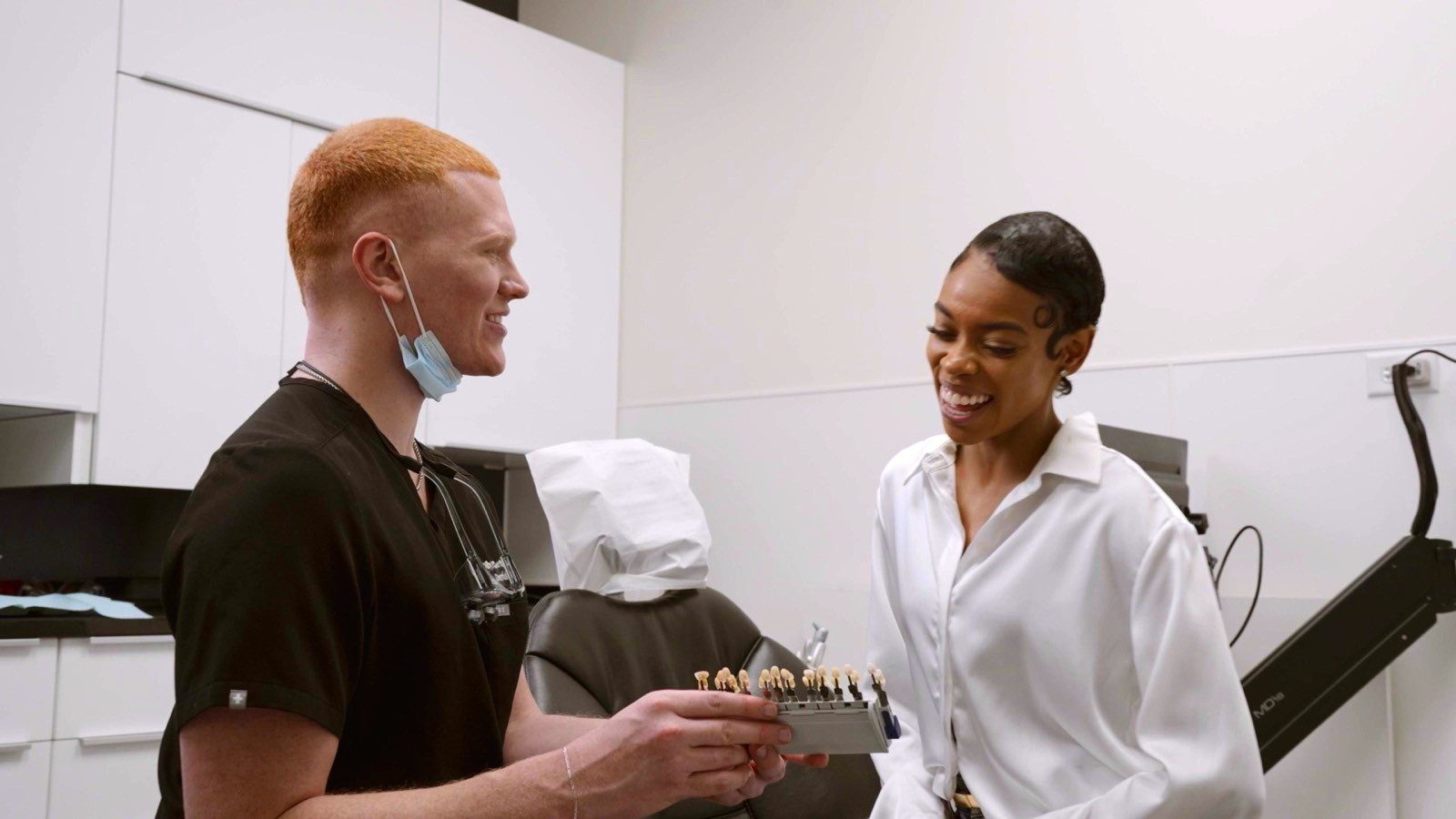
Bonding is usually done in one visit, often in under an hour for a tooth or two. Most of that time goes into matching the shade and shaping the resin, so the repair blends in.
We match the resin to your tooth at the start, before it dries out, because a dry tooth looks lighter and the match would be off once it settles.
The tooth is lightly roughened and conditioned so the resin can grip. Most bonding needs no numbing, and little or none of the tooth is removed.
Tooth-colored resin goes on in thin layers and is sculpted into shape, with a more translucent layer at the edge, as on a natural tooth, so it looks like tooth, not a patch.
A blue curing light hardens each layer in seconds.
We refine the shape, check your bite and polish the resin to the same shine as the teeth beside it, so light catches it the same way.
“What really sets my practice apart is that we approach dentistry like an art form.”

Small things in visible places: a chipped or cracked edge, a small gap between front teeth, a tooth that’s shorter or narrower than its neighbor, a spot of discoloration, or a worn edge. It can also cover root surfaces exposed by gum recession, which often eases sensitivity.
Bonding is less suited to big changes in color or shape across many teeth, or to back teeth that take heavy chewing. For those, veneers, crowns or whitening usually do better. We’ll tell you which, and when bonding is enough, that’s all we’ll suggest.
Usually not. Most bonding adds to the tooth rather than removing from it, so there’s nothing to feel beyond a little pressure. If a chip is deep or close to the nerve, the tooth may need numbing, and we’ll tell you before we start, never halfway through.
Bonding suits one or two small fixes, and veneers a larger change. Bonding is done in one visit, costs less and needs little or none of the tooth removed, so it’s a good place to start and easy to change your mind about.
Porcelain veneers take longer and usually need a thin layer of enamel shaped away, but they resist stains and last longer, and they can change the shape and color of several teeth at once. If one chip is what bothers you, you don’t need a set of veneers to fix it.
Usually five to ten years, sometimes longer. Resin is softer than enamel or porcelain, so edges can chip and wear with time, especially if you bite your nails or grind.
And bonding is easy to repair. A chipped or worn edge can usually be touched up or redone in one visit, without starting over.
Bonding takes up stain more easily than enamel. Coffee, tea, red wine and smoking slowly darken resin, and it doesn’t respond to whitening. A polish at your cleanings keeps it bright, and bonding can be refreshed when it dulls.
If you’re thinking about whitening, do it first. We match the bonding to your new shade, so it doesn’t end up darker than the teeth around it.

Look after bonded teeth the way you look after your own, with a little extra care where the resin meets the bite.
Bring the chip, the gap or the edge that’s been bothering you. We’ll tell you whether bonding is the right fix and walk you through your options and the cost before you decide. You’re only offered what you need.
Dr. Colby James Gerth, DMD, earned his Doctorate in Dental Medicine at Midwestern University and has practiced in Chicago since 2020. He opened Pearl in Lincoln Park in 2025, a practice focused on cosmetic dentistry, where even a small repair is done with how your smile looks in mind.
Yes. A chipped front tooth is the most common reason for bonding. The missing corner or edge is rebuilt in resin matched to your tooth, usually in one visit.
Usually, if the gap is small. Resin is added to the sides of the teeth to close it. Larger gaps may look better closed with Invisalign, or a mix of both, so the teeth don’t end up looking too wide.
It’s reversible in most cases, because little or none of the tooth is removed. Bonding usually lasts five to ten years, then it’s touched up or redone in a visit.
Your natural teeth whiten, but the bonding won’t. If you want whiter teeth, whiten first and have the bonding matched to the new shade.
Sometimes. When bonding repairs a chipped or broken tooth, many plans cover part of it; when it’s purely cosmetic, they usually don’t. Contact us and we’ll help you understand what your plan may cover.
Yes, right away. The resin is fully hardened before you leave. Go easy on dark drinks for a day or two.
They use the same kind of resin. A filling repairs a cavity inside the tooth; bonding is shaped onto the outside to change how the tooth looks.
Something else on your mind? Call (312) 858-7067 or see all our questions and answers.
Book online or call us. Most bonding is done in a single visit, and you’ll know it’s the right fix before we begin.