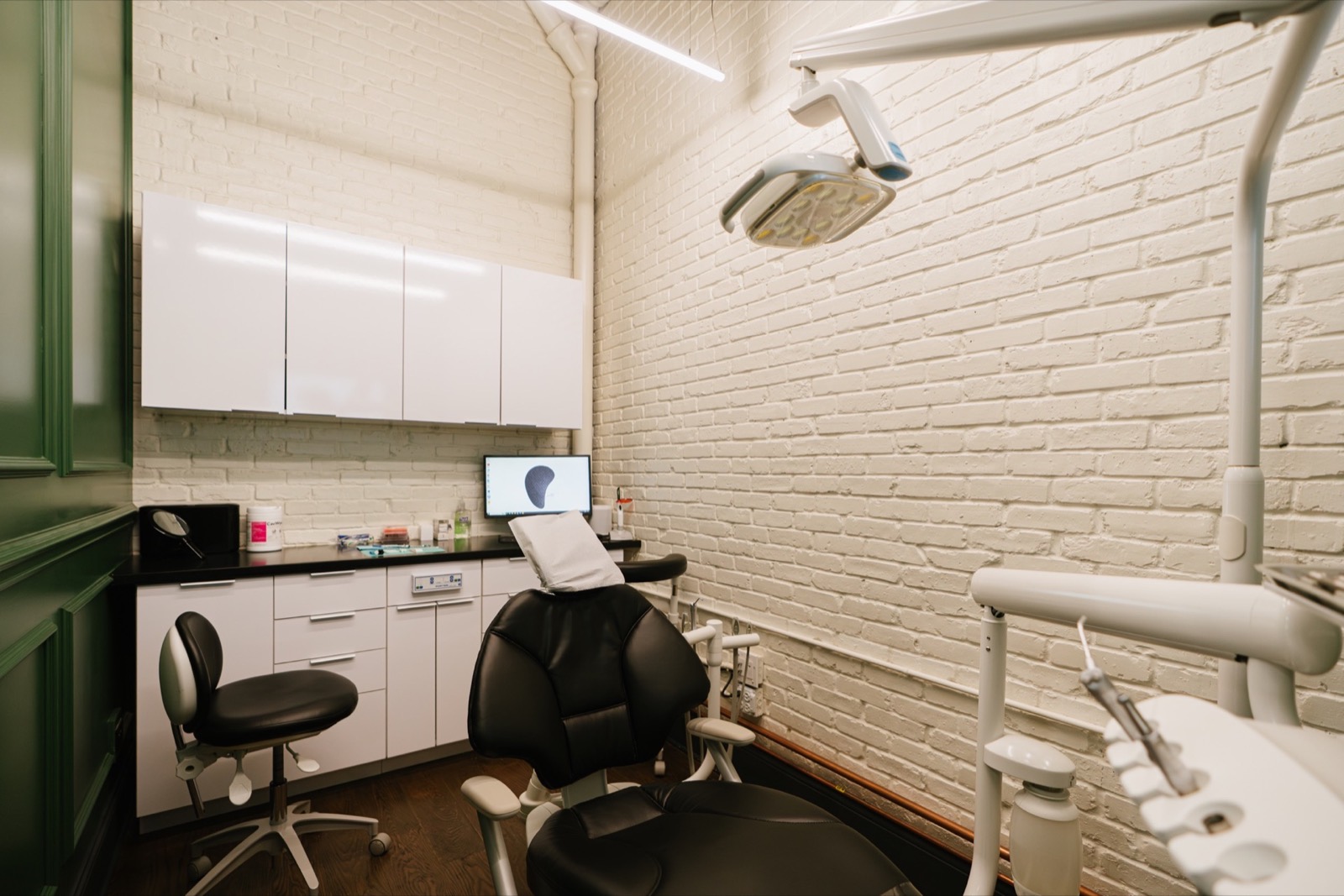
A cracked or worn tooth made strong again, or a gap filled, with work matched to the color and shape of your own teeth so the repair doesn’t show.

Dental crowns and bridges in Lincoln Park

A crown usually comes up when one tooth has been through a lot: a large old filling that keeps chipping, a crack that hurts when you bite down, a tooth that’s had a root canal, or a front tooth that has darkened over the years. A dental crown covers the whole tooth to hold it together. A bridge comes up when a tooth is already gone and the teeth either side can hold its replacement.

Many people expect a crown to look like one: a little too white, a little too even, with a line at the gum. At Pearl, in Chicago’s Lincoln Park, a crown on a back tooth gets the same care as a front one. It’s matched to the shade and shape of your own teeth, so the repair doesn’t show, and it should feel like your tooth again, not something you chew around.

“Even something as routine as a small filling is done with aesthetics in mind.”
Dr. Colby
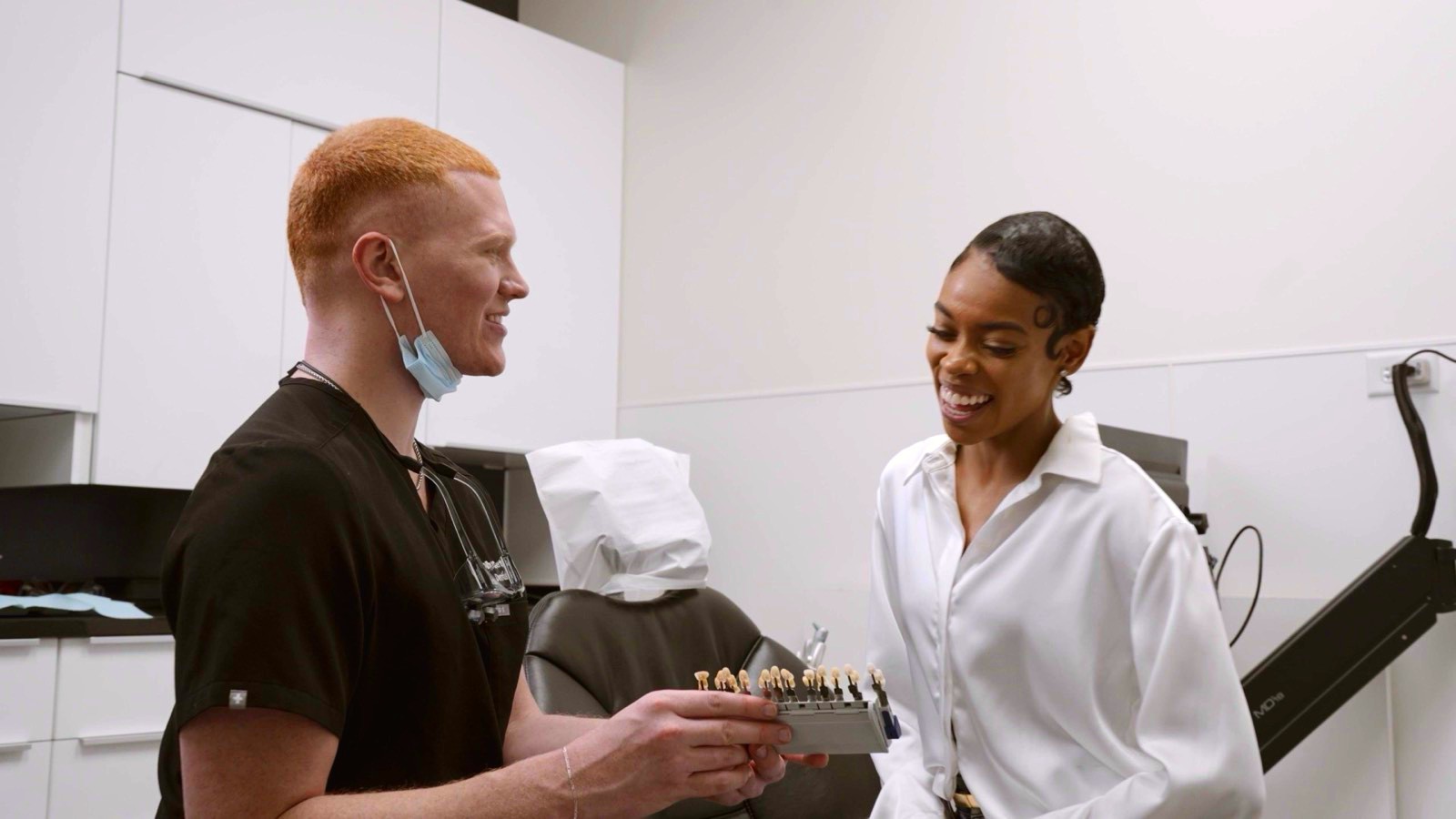
Dr. Colby matching a shade with a patient

We crown a tooth only when a filling won’t hold

A tooth needs a crown when it has lost too much of itself for a filling to hold. A filling sits inside the tooth and relies on the walls around it; once those walls are thin or cracked, biting can split them. A crown covers the tooth from the gumline up, so the force is spread over the whole tooth and you can chew on that side again.

The usual reasons are a large filling or a cavity that has undermined the tooth, a cracked tooth, a back tooth after a root canal, a tooth worn down by grinding, and an implant, which needs a crown on top. A crown can also reshape a tooth that’s badly discolored or misshapen when a veneer can’t.

If a filling will do, we’ll tell you. A crown takes off more of the tooth, and that’s tooth you don’t get back, so we keep crowns for the teeth that need them.

Crowns matched to your own teeth

Most crowns take two visits, with a temporary crown in between, so you’re never without a tooth while yours is made. We take our time on the fit, the bite and the shade, so it feels like your own tooth and doesn’t stand out.

  1. 01

    Checking the tooth

    An exam and an X-ray show whether the root and the nerve are healthy. If the tooth needs a root canal first, you’ll know before anything is done.

  2. 02

    Shaping it

    With the tooth numbed, a thin layer is taken off all around, only as much as the crown needs to sit over it.

  3. 03

    A digital scan

    We scan your teeth with our iTero scanner, so there’s no tray of impression putty to bite into.

  4. 04

    Matching the shade

    We choose the color against your neighboring teeth, including how translucent the edge is, so it matches in daylight as well as under the light.

  5. 05

    A temporary crown

    It protects the tooth while yours is made. Avoid sticky food on that side until the next visit.

  6. 06

    Fitting your crown

    We check the fit, the color and your bite, then bond it in place. It should feel like your own tooth within a few days.

“He explains everything in depth and answered all of my questions!”
Autumn F., in a Google review
A man in a yellow polo, smiling

Replacing a missing tooth with a bridge

A dental bridge is a false tooth held in place by the teeth on either side of the gap. Those two teeth are crowned, and the replacement tooth is joined between them, so the three work as one piece that stays in your mouth.

A bridge fills the gap in a few weeks, without surgery, and stops the teeth around the space from drifting into it. The false tooth is shaded and shaped like the ones beside it, so it reads as your own.

Should I get a bridge or an implant?

If the teeth beside the gap already have large fillings or crowns, a bridge makes good use of them. If they’re healthy and untouched, an implant usually makes more sense, because it replaces the tooth without shaping its neighbors, and it helps keep the bone in the gap.

A bridge is quicker. An implant takes a few months but tends to last longer. We’ll show you on your X-rays which suits your mouth, and why, before you choose.

How long do dental crowns last?

Usually 10 to 15 years, and often much longer. When a crown does need replacing, it’s most often because decay has started at its edge, along the gumline. That edge is where we take our time on the fit, and where your daily care counts most.

Brush along the gumline, floss around the crown every day, and wear a night guard if you grind. Bridges need a floss threader or a water flosser to clean under the false tooth.

Does getting a crown hurt?

Usually not. The tooth is numbed before it’s shaped, so most people feel pressure rather than pain. If you’re nervous, tell us, and we’ll explain each step before we do it.

Afterward the gum around it can be tender for a day or two, and the tooth may be sensitive to cold for a little while.

If it still aches when you bite after a week, the crown may be sitting slightly high. Call us, and a small adjustment usually fixes it.

What dental crowns are made of

Most crowns today are all-ceramic: porcelain or zirconia, a strong ceramic that can be made tooth-colored. Gold and metal-backed crowns still have a place on back teeth that take heavy wear.

Our porcelain crowns are matched to the color and structure of your own teeth, so a crowned tooth doesn’t stand out from its neighbors when you laugh.

See what’s going on before you decide

If a tooth is cracked, sore when you bite, or holding a filling that keeps breaking, we’ll look at it, show you the X-ray and talk through your options and the cost before anything is done. We’re at 1009 W Webster Ave, across from St. Vincent de Paul Church.

Book a visit

Meet Dr. Colby

Dr. Colby James Gerth, DMD, earned his Doctorate in Dental Medicine at Midwestern University and has practiced in Chicago since 2020. He opened Pearl in Lincoln Park in 2025, with a focus on cosmetic dentistry that carries into every crown.

Meet Dr. Colby

Common questions

How much does a dental crown cost?

It depends on the tooth, the material, and whether it needs other work first, such as a root canal or a build-up. You’ll know the cost before you decide, with no surprises once you’re in the chair.

Does insurance cover crowns?

Often, in part. Many dental plans treat a crown as major care and cover a share of it, up to the plan’s yearly maximum. Contact us and our team will be happy to help you understand what your plan may cover.

Does a crown mean the tooth is dead?

No. Most crowned teeth are alive and healthy. A crown is often placed after a root canal, but many crowns go on teeth that never need one.

Is a crown the same as a cap?

Yes. “Cap” is the everyday word for a crown.

Can a crowned tooth still get a cavity?

Yes, at the edge where the crown meets the tooth. Brushing along the gumline and flossing every day keeps that edge healthy.

Can I whiten a crown?

No. Crowns, fillings and veneers don’t whiten, so if you’d like whiter teeth, whiten first and we’ll match the crown to the new shade.

What can I eat with a temporary crown?

Most things, chewed on the other side. Avoid sticky and very hard foods, like caramel, gum and nuts, and slide floss out sideways rather than pulling it up.

What if my crown falls off?

Keep it and call us. Don’t glue it back with household glue. A crown that comes off can often be cleaned and recemented.

Something else on your mind? Call (312) 858-7067 or see all our questions and answers.

Related care

All treatments

Let’s take a look at that tooth

Book online or call us. We’ll show you what’s going on and talk through your options before anything is done.