Porcelain veneers that look like your own teeth, designed around your face, and you see your new smile before we begin.

Porcelain veneers in Lincoln Park

A front tooth that chipped in high school. A gap that shows in every photo. Teeth that stayed yellow through every whitening kit, or edges worn short from grinding. Most people who ask about veneers have been smiling around something like this for years. Porcelain veneers cover the front of those teeth with thin shells, made in the shape and shade you choose, so you can smile without thinking about it.

At Pearl Aesthetics & Dentistry, in Chicago’s Lincoln Park neighborhood, we take the design slowly. Veneers are planned around your face, your lips and the way you smile, and you see a digital mock-up of the result before any tooth is prepared. You decide once you like what you see.

“What really sets my practice apart is that we approach dentistry like an art form.”
Dr. Colby

Getting porcelain veneers, step by step

Porcelain veneers usually take a few weeks, from the first consultation to the final fitting. The planning comes first and takes as long as you need, so you can ask for changes to the design before any tooth is prepared.

  1. 01

    A consultation

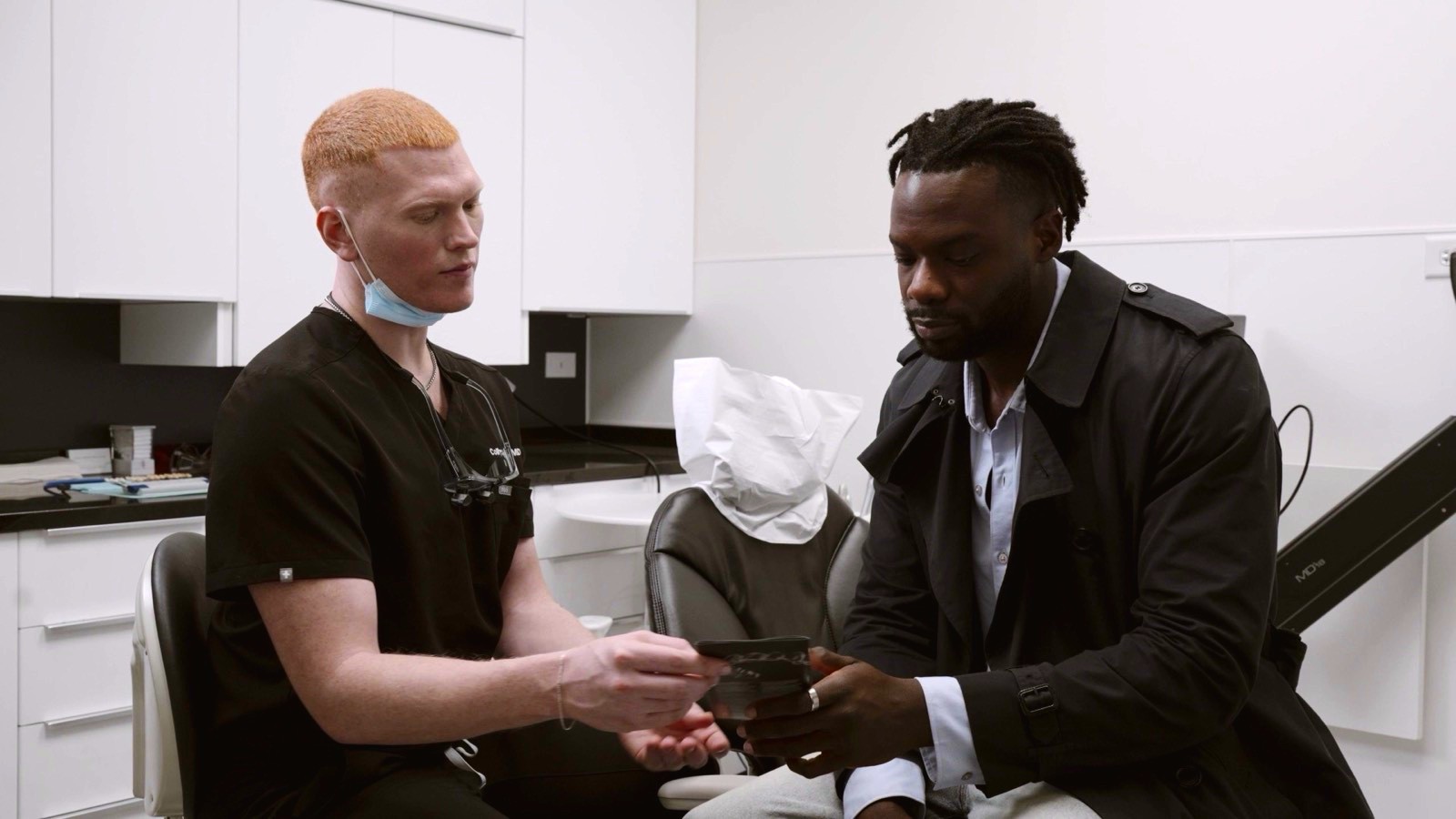
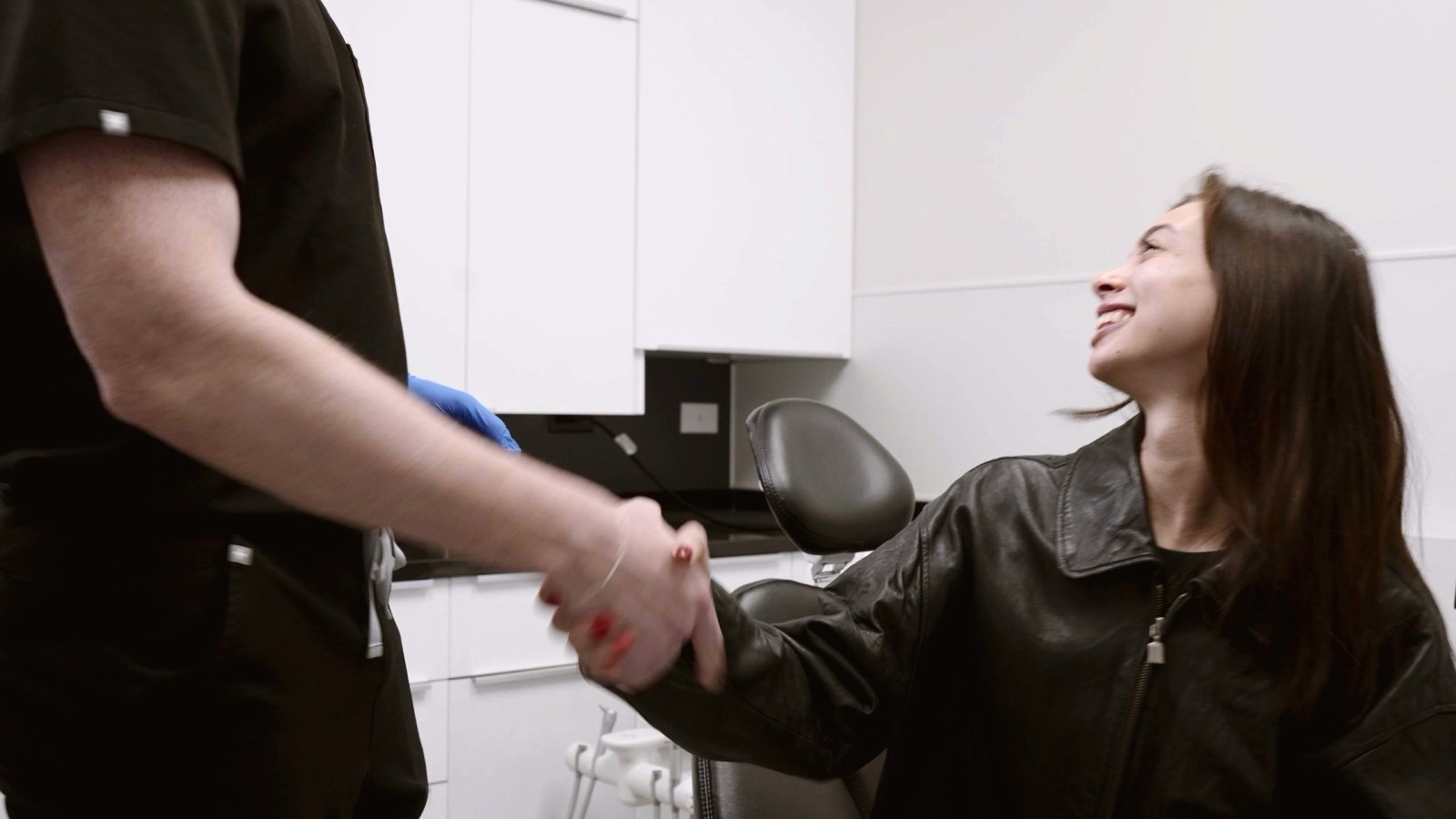
    You tell us what bothers you, in your own words. We look at your teeth, gums and bite, and take photos and a digital scan, so the plan is built around your smile.

  2. 02

    A plan and a preview

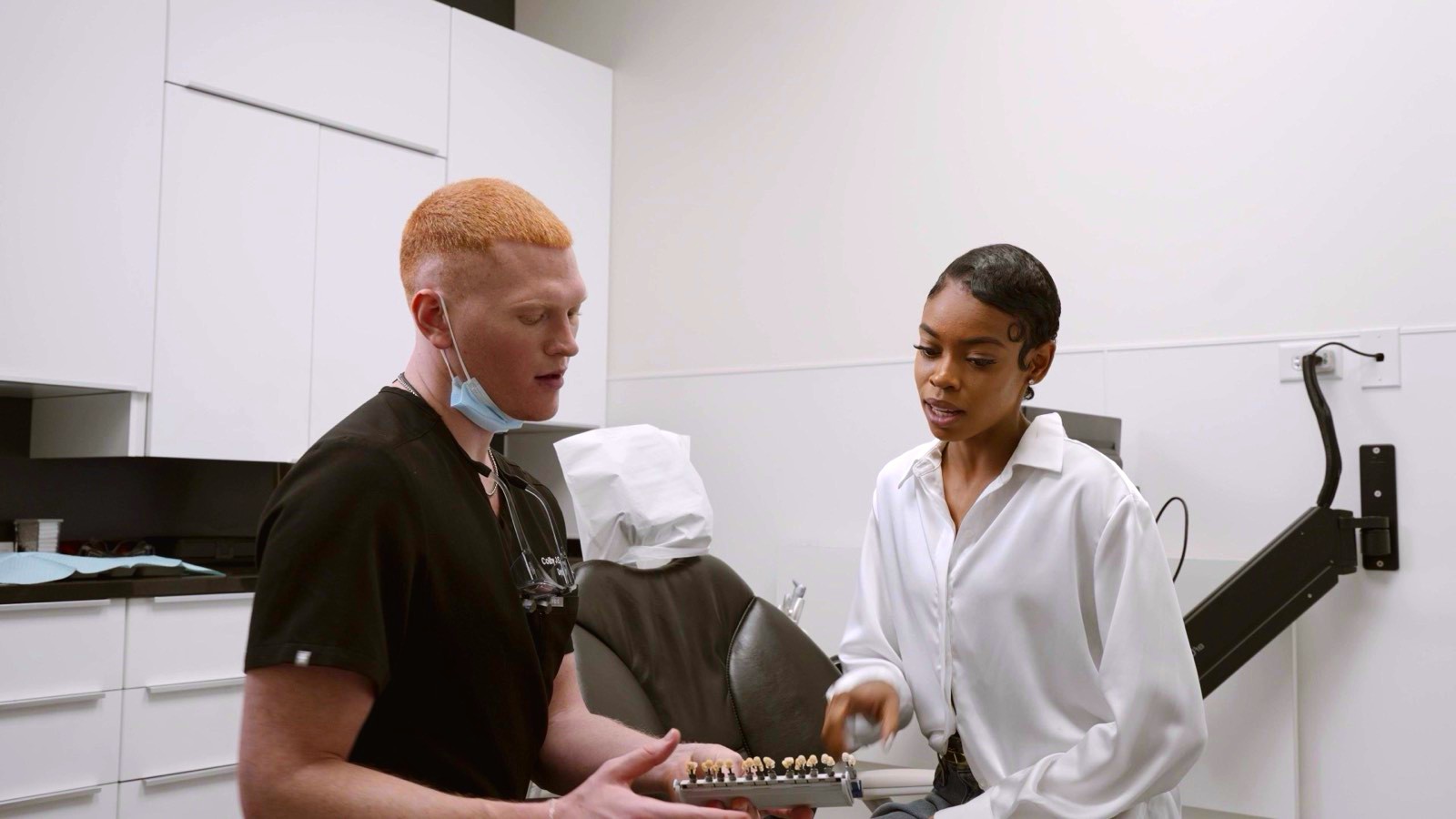
    We design the shape, length and shade around your face and show you a digital mock-up, with the timeline and cost, so you know exactly what you’re getting before you say yes.

  3. 03

    Preparing the teeth

    Once you’ve approved the design, a thin layer of enamel is shaped from the front of each tooth so the veneer sits flush instead of bulky. Then our iTero scanner records them, with no impression putty.

  4. 04

    Temporaries

    You wear temporary veneers while the porcelain is made. Take them to work, to dinner, into photos, and tell us anything you’d change.

  5. 05

    The fitting

    Each veneer is checked for fit and color before it’s bonded, and your bite is adjusted until it feels like your own.

  6. 06

    A check afterward

    We see you again once you’ve settled in, to fine-tune anything that feels off and look at your gums and bite.

“My husband and I are driving over 3 hours one way for each appointment with Dr. Colby to complete my husband’s smile makeover!”
Morgan W., in a Google review
A man with a wide, natural smile

Veneers that look like your own teeth

Veneers should look natural when they’re designed for you. They look fake when they’re too white, too even and too big for the face: every tooth the same flat rectangle, in a shade no tooth is born with.

Natural teeth have edges you can almost see through, small differences in length from tooth to tooth, and color that deepens toward the gum. We keep those details, and choose the shade for your face and skin tone rather than the whitest tab on the guide.

So people notice you look well, and rarely guess what changed.

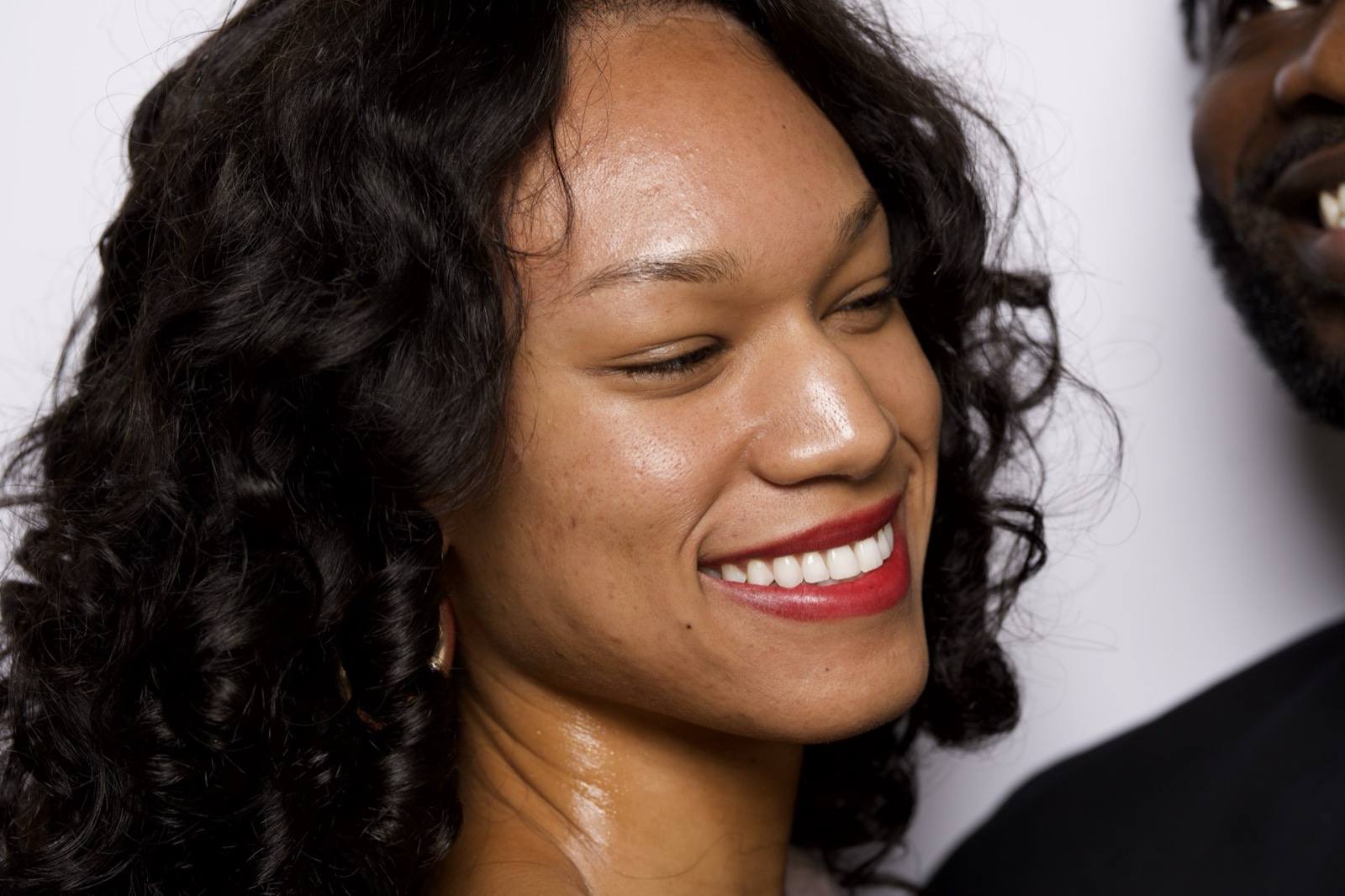
A woman smiling in warm light

What can veneers fix?

Most people who ask about veneers aren’t unhappy with every tooth. It’s one front tooth that’s gone darker, edges that chipped years ago, or a gap they’ve learned to smile around. Veneers change the color, shape and size of the teeth that show when you smile. Sometimes they aren’t the answer: if your teeth need to move, Invisalign first can mean fewer veneers, or none. We’ll tell you that, because the goal is a smile that looks like yours, not more work than you need.

They work well for stains whitening can’t lift, like a single dark tooth or gray banding; chipped, worn or uneven edges; teeth that are small, short or pointed; small gaps; and mild crookedness. They don’t fix a bite problem, teeth that are far out of line, or unhealthy gums.

Am I a good candidate for veneers?

Usually, if your teeth and gums are healthy and there’s enough enamel to bond to. Decay and gum disease are treated first, because a veneer is only as sound as the tooth under it, and you want this work to last.

Heavy grinding or clenching can chip porcelain, so if you grind, we’ll plan a night guard to protect the veneers while you sleep.

“He explains everything in depth and answered all of my questions!”
Autumn F., in a Google review

Porcelain and composite veneers

For most people who want the change to last, we suggest porcelain. It’s made outside the mouth, keeps its color and shine for years, and resists stains from coffee and red wine.

Composite veneers are tooth-colored resin, shaped directly on the teeth. They cost less and need little or no change to the tooth, but they stain and chip more easily and need refreshing sooner. For one chip or a small gap, bonding is often the better start, and we’ll say so.

Do veneers ruin your teeth?

No. Most porcelain veneers need only a thin layer of enamel, often about half a millimeter, shaped from the front of the tooth so the veneer doesn’t look bulky. That enamel doesn’t grow back, so the tooth will always need a veneer or similar covering, which is why nothing is prepared until you’ve seen your new smile and said yes.

Some teeth need little or no preparation, depending on their shape and position. We’ll tell you which yours are at the consultation, before you decide anything.

How long do porcelain veneers last?

Often 10 to 15 years, and many last longer. That’s why we take the design slowly: you’ll live with this smile for a decade or more, so it has to look like you on an ordinary day, not just in a photo the day it’s fitted. What shortens their life is grinding and biting hard things like ice or pens, so if you grind, we’ll plan a night guard with them.

Healthy gums help them last too. If a gum recedes and shows the edge, that veneer may need replacing sooner. And if one veneer chips or wears out years later, it’s usually replaced on its own, not the whole set, because porcelain can’t be patched invisibly.

A woman smiling in a studio portrait

Designed around your face

Veneers are often picked from a shade tab and a catalog of tooth shapes, and the result can look like it belongs to someone else. We approach dentistry as an art form, so we design your veneers for your face, not from a catalog.

So we start with you: the line of your lips when you smile, how much tooth shows when you talk, the width of your smile, your skin tone. Photos and an iTero scan let us design the length, shape and shade of each tooth to suit you, so the result fits your face and still looks like you.

See your new smile before we start

You see the result before any tooth is prepared. We show you a digital mock-up of the planned result, so you can ask for a longer edge, a softer shade or a narrower tooth while it’s still easy to change.

Your temporaries are a second preview. You live with the new shape at work and at dinner, and anything you’d change is carried into the final porcelain.

Can small changes enhance my smile?Video · 0:52
Tooth nail polish? Dr. Colby reactsVideo · 1:47
Dr. Colby on the small changes that bring a smile into balance, and on tooth polish from TikTok

Cost and insurance

The cost of veneers depends on how many teeth, the material and how much planning your smile needs, so you get the cost of your own plan before you decide anything. Porcelain veneers are priced per tooth. Most people choose between four and ten, the teeth that show when they smile, and some need only one or two.

Dental insurance rarely covers veneers placed for appearance, though a plan may help when a veneer repairs a broken tooth. Contact us and our team will be happy to help you understand what your plan may cover.

Choosing between veneers, bonding, whitening and Invisalign

Start with what bothers you. If it’s color alone, whitening is gentler and costs less. If it’s one chip or a small gap, bonding repairs it in a visit with little or none of the tooth removed. If your teeth are crooked but healthy, Invisalign moves them without covering them.

Veneers make sense when you want to change shape, size and color together, or when the gentler options can’t get you there. Many smiles use a combination. We’ll walk you through each before you decide, and you’re only offered what you need.

A woman laughing, eyes closed

Caring for your veneers

Look after veneers the way you look after your own teeth, plus a few habits that protect the porcelain.

  • Brush twice a day with a soft brush and a non-abrasive toothpaste; gritty whitening pastes can dull the polish over time.
  • Floss every day. The tooth under a veneer can still decay where the two meet.
  • Don’t use your teeth as tools: no ice, pens, fingernails or bottle caps.
  • Wear your night guard if you grind or clench.
  • Keep your cleanings and checkups, so we can check the edges and your gums.

Porcelain doesn’t stain like enamel, but the bonded edge can pick up a little color from coffee or red wine over the years. A professional polish usually lifts it.

Start with a consultation

Tell us what you’d like to change, in your own words. We look at your teeth, gums and bite, take photos and an iTero scan, and walk you through your options, the timeline and the cost before you decide. You’re only offered what you need.

Book a consultation

Meet Dr. Colby

Dr. Colby James Gerth, DMD, earned his Doctorate in Dental Medicine at Midwestern University and has practiced in Chicago since 2020. He opened Pearl in Lincoln Park in 2025, a practice focused on cosmetic dentistry, where every smile is designed to look beautiful and natural.

Meet Dr. Colby

Common questions

Do veneers hurt?

Not usually. The teeth are numbed while they’re prepared, and most people feel pressure rather than pain. Teeth can be sensitive to cold for a few days afterward.

How many porcelain veneers do I need?

Usually four to ten, depending on how many teeth show when you smile. Some people need only one, to match a chipped or dark tooth to its neighbors, which takes careful shade matching so it doesn’t stand out.

Should I whiten my teeth before veneers?

Often, yes. Porcelain keeps the color it’s made in and won’t whiten later, so whiten your other teeth first and the veneers are matched to the new shade.

Can veneers fix crooked teeth?

Mildly crooked teeth, yes: veneers can make them look straight. Teeth that are far out of line are better moved with Invisalign first, which often means fewer veneers and more of your own tooth kept.

Can veneers be removed?

Not in the usual sense. Because enamel is shaped for most porcelain veneers, those teeth will always need a veneer or crown, which is why you see and approve the design first. Old veneers can be replaced with new ones.

How long does it take to get veneers?

Usually a few weeks from preparing the teeth to the final fitting, while the porcelain is made. The planning comes first and takes as long as you need.

Does insurance cover veneers?

Usually not, when they’re for appearance. A plan may cover part of a veneer that repairs a broken tooth. Contact us and we’ll help you understand what your plan may cover.

Can I eat normally with veneers?

Yes. Once they’re bonded you can eat what you like. Avoid biting directly on ice, hard candy or bones, as you would with your own front teeth.

What if a veneer chips?

Call us. A small chip can sometimes be polished smooth; a larger one usually means replacing that veneer. Keep any piece and chew on the other side until we see you.

Something else on your mind? Call (312) 858-7067 or see all our questions and answers.

Related care

All treatments

Start with a conversation

Book a consultation online or call us. You’ll see your new smile before anything is decided.